Choose shoes that work with your outfit's proportions
Start with what your feet need to do
Choose for the day's activity before judging the silhouette. A pair you can wear for a short dinner may not work for a day of sightseeing. Check the venue, the walking distance, the surfaces and the weather. Familiar shoes that you know are comfortable are often a better starting point than an untested pair chosen only for a photo.
There is no universal shoe that belongs with every trouser shape. The useful question is whether the shoe, hem and upper half of the outfit feel connected while still letting you take part in the day.
Look at the place where the hem meets the shoe
Put on the trousers and shoes together. If the hem drags, bunches heavily or catches under your heel, try another pair or consider a suitable alteration. Do not assume a virtual preview can measure the length accurately. With cropped trousers, the exposed gap becomes part of the shape; decide whether you like that gap with the socks or hosiery you will actually wear.
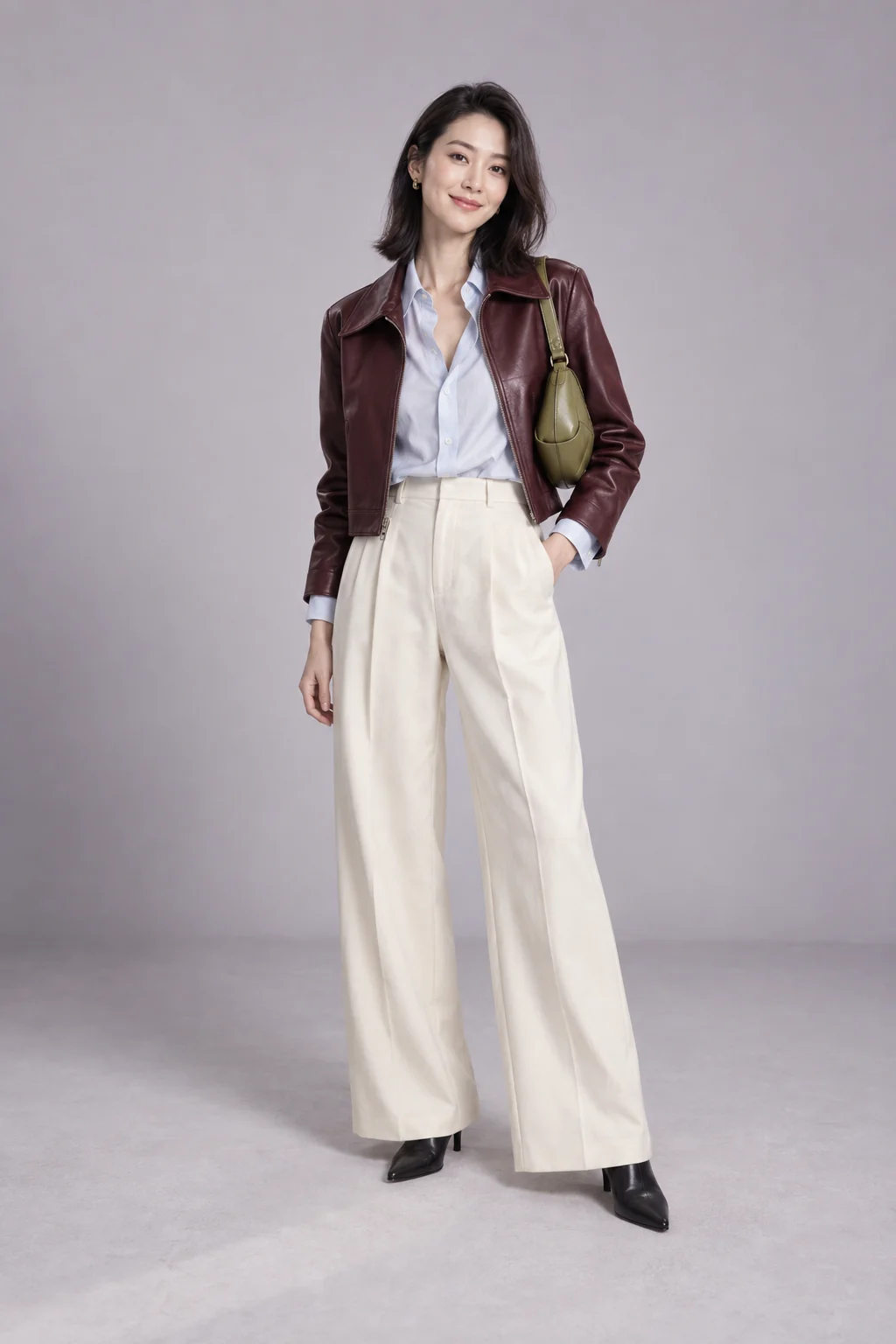
For wide-leg trousers, a substantial sneaker or boot can balance the fabric, while a low-profile shoe can create a lighter result. Both can work. The hem must still clear the ground appropriately. With tapered trousers, a very bulky shoe makes a stronger contrast; choose it because you enjoy that effect, not because the colors happen to match.
Try three comparisons from the same closet
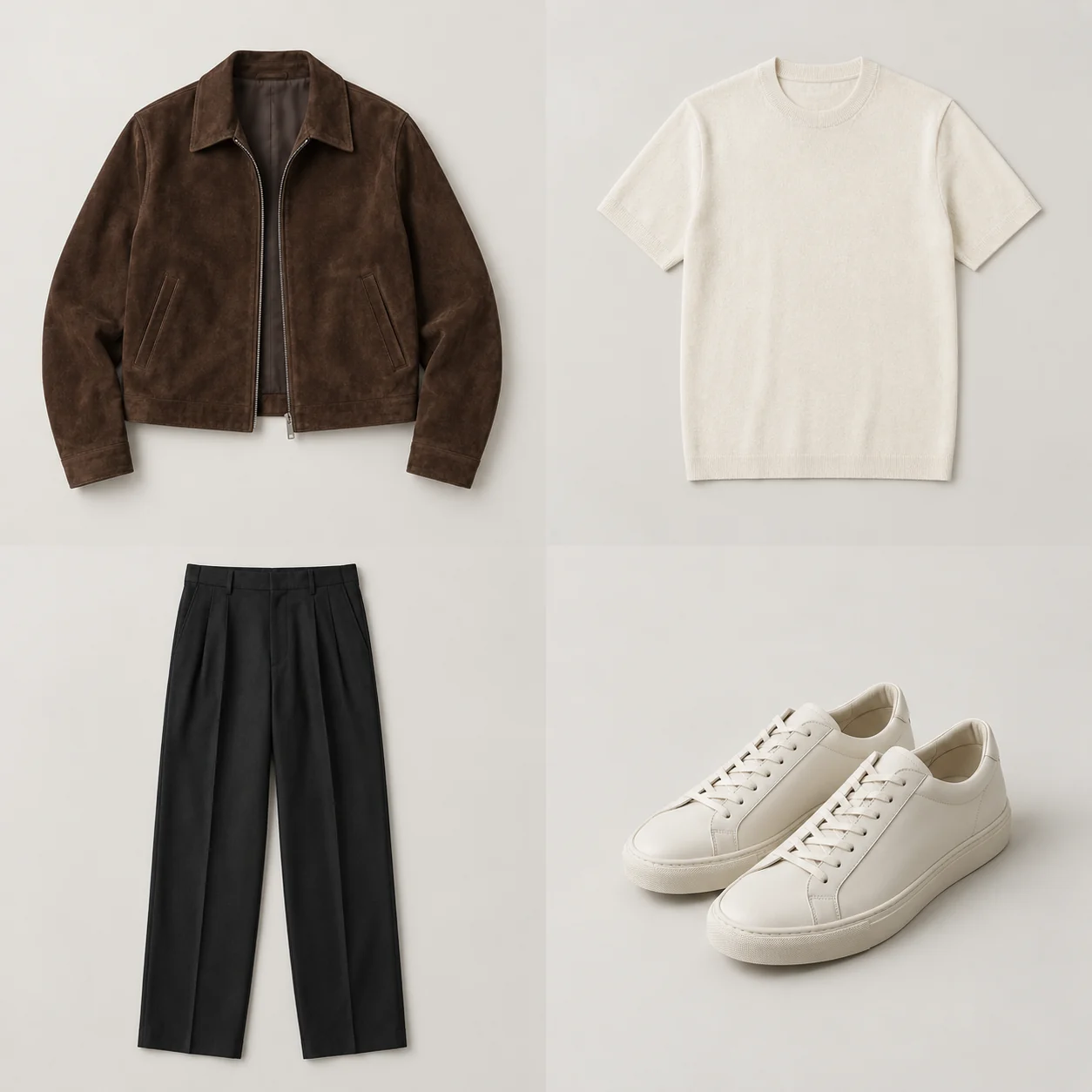
- Straight jeans and a cardigan: compare simple sneakers with loafers. The sneakers make the combination more relaxed; loafers may make it feel more polished. Check the actual venue before choosing either.
- Wide trousers and a plain tee: compare a substantial sneaker with a cleaner, slimmer shoe. Look at the whole outline, then check the hem while walking. The slimmer pair may need a different trouser length.
- A midi skirt and knit: compare an ankle boot with a flat or sneaker. Each changes the visible breaks in the lower half. Try the real socks or tights too; leaving them out of the comparison can change the result when you get dressed.
These are experiments, not rules about making a body look taller or smaller. There is no requirement to “correct” your proportions. Use the comparison to find an outline you like and can comfortably move in.
Connect the visual weight, not every color
A heavy coat and sturdy boots can feel coherent because both have presence. A light shirt and delicate sandal can feel coherent for a different reason. Contrasting those weights can also be deliberate, but it helps to know that you are doing it. If the look feels disconnected, compare it with one simpler alternative before replacing several garments.
Shoes do not have to match the belt or bag exactly in every casual outfit. Look instead at whether their color, finish and level of formality make sense together. A glossy formal shoe may feel out of place with technical running clothes even if both are black.
Finish with a real-world check
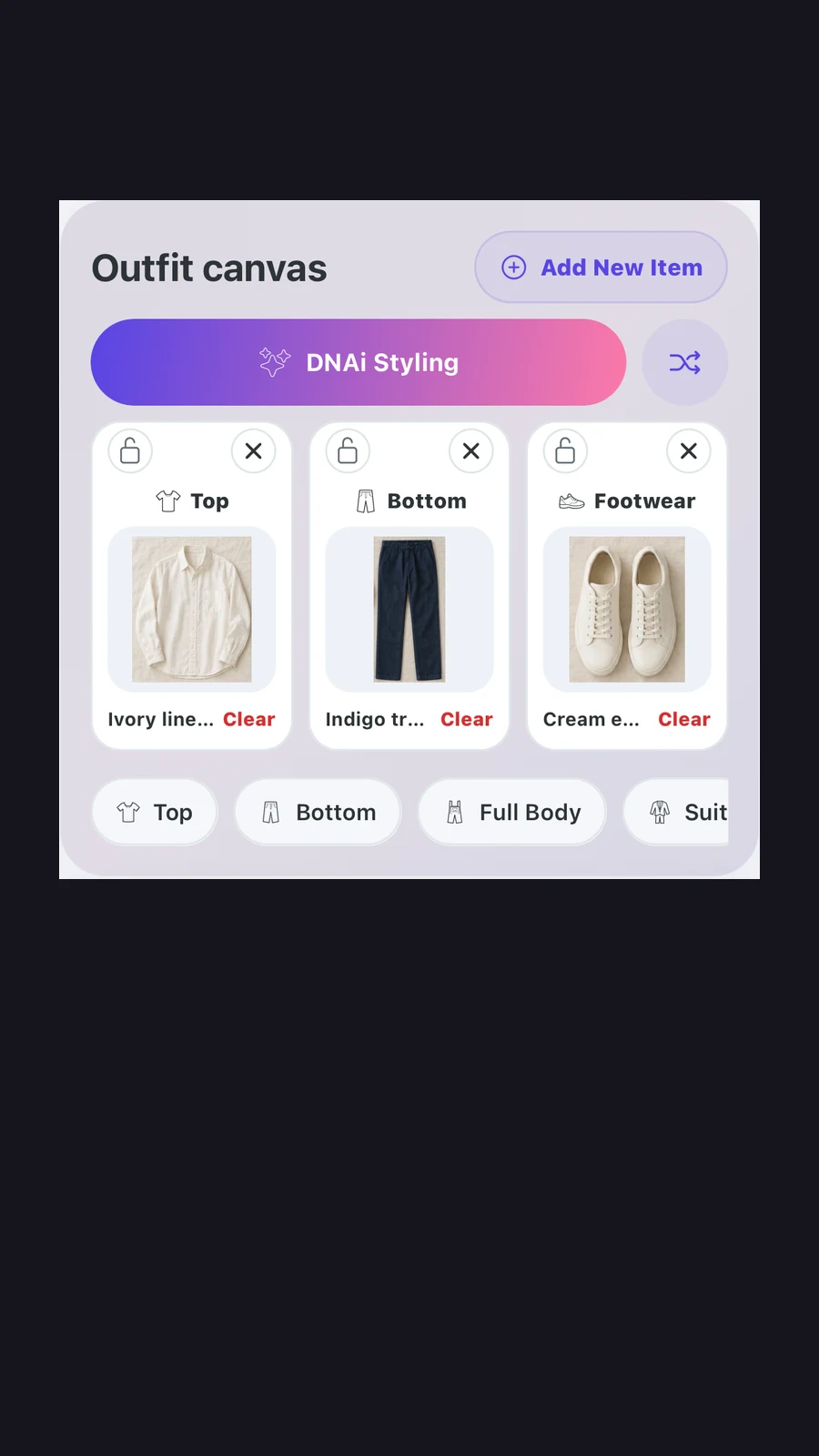
Use your outfit canvas to compare the combinations without losing the original. Then try the strongest option on, walk across the room and sit down. Check that the shoes are available, clean and suitable for the weather. The canvas helps you see relationships; it cannot tell you whether a shoe rubs.
Save a short note about what worked, such as “straight hem sits cleanly over these sneakers.” Next time, that is more useful than “81% match.” A strong outfit should make sense when you understand the pieces, not only when a score says it does.
PUT IT INTO PRACTICE
Your wardrobe is the starting point.
Explore outfit planner in DressNyse, then put it to work with clothes you actually wear.
Get the app ↗