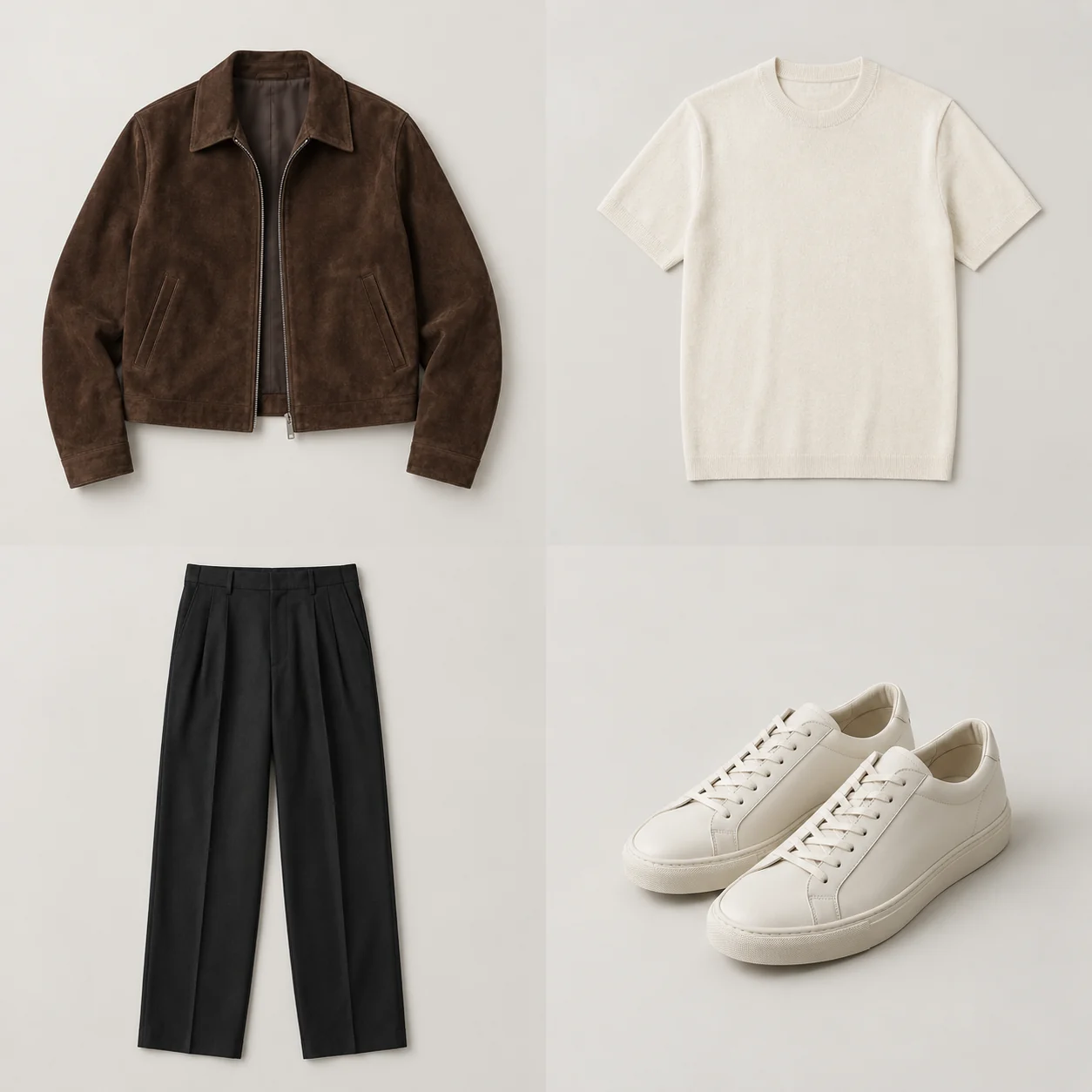
A wardrobe gap audit: what is actually missing from your closet?
Start with three real plans
Choose three situations that recur in your life: a normal workday, a relaxed weekend and a dinner out, for example. Lay out a complete outfit for each using only what you own. Include shoes, outer layers and the bag you actually need. A list of ten generic “essentials” cannot reveal the same gaps because it does not know your routine.
Do this with clothes you can wear now. An item that no longer fits, needs a repair or is stored elsewhere is not a dependable answer for tomorrow. Keep those pieces visible in your audit, but distinguish them from the usable rotation rather than pretending every garment is equally available.
Separate a missing piece from a different problem
If you have four suitable work shirts but all four are in the laundry, the immediate problem is care or rotation. If your trousers would work after a repair, the first decision is whether that repair is worthwhile. If you have shoes for every dinner but dislike how they feel after ten minutes, another top will not fix the problem.
Write the obstacle as a sentence: “I cannot complete a comfortable outfit for a wet commute because my only appropriate shoes leak.” That is more useful than “need shoes.” It gives the next decision a job and helps you avoid buying something attractive that leaves the original problem untouched.
A worked example: seven tops, no complete dinner outfit
Imagine a closet with seven casual tees, two flannels, good dark jeans, running shoes and a winter coat. The owner wants a relaxed restaurant outfit. A third flannel may produce another variation, but the real constraint could be footwear that feels appropriate and comfortable at that restaurant.
Before buying, test the cleanest existing shoes with the dark jeans and a plain tee under an open flannel. If that already suits the venue, there may be no purchase to make. If the venue requires something different, define that requirement first. A genuine gap is specific to the occasion, not proof that every wardrobe must contain loafers or a blazer.
Ask what a potential addition would unlock
For a possible purchase, identify two or three complete combinations it would help you wear. This is a usefulness check, not a rule that forbids a special-event piece. A rain layer used with your work trousers, weekend jeans and travel outfit may solve several recurring problems. A distinctive celebration outfit can still be worthwhile if that occasion matters to you.
Then compare against near-duplicates. Check color, cut, fabric, condition and actual purpose. Two black trousers might serve different jobs; two similar hoodies may not. A digital closet makes those comparisons easier, especially when the piece you forgot you owned is at the back of a drawer.
Keep a short list with a reason to wait
Rank the gaps by frequency and impact. A comfortable item needed three mornings a week usually deserves attention before an imagined holiday six months away. Note the budget you are comfortable with, measurements or fit needs you must check, and whether a repair, borrowing or a different combination could solve the problem.
Your next step is not necessarily shopping. Complete and save the three outfits you started with, then revisit the unresolved one. If you do browse, compare real retailer availability, price and return terms before purchasing. A collage or virtual try-on can help visualize a possibility; neither establishes physical fit or makes an unnecessary purchase necessary.
PUT IT INTO PRACTICE
Your wardrobe is the starting point.
Explore digital closet in DressNyse, then put it to work with clothes you actually wear.
Get the app ↗