How to plan an outfit for changing weather
Read the hours you will actually be outside
A daily high does not tell you what the walk to the station will feel like at 7 a.m. Check the forecast for the departure, the longest outdoor stretch and the journey home. Note rain and wind as well as temperature. Then write down the activity: waiting at a bus stop, walking briskly and sitting on a patio can call for different choices in the same conditions.
Your comfort matters more than a universal temperature-to-garment chart. Treat the examples here as planning exercises, not promises of protection. In severe heat, cold or storms, follow local weather guidance and use suitable protective clothing rather than relying on an outfit recommendation.
A warm afternoon with a cool indoor stop
Suppose the afternoon is around 82°F, your plans involve a short walk and the restaurant is often heavily air-conditioned. Begin with an outfit you would be happy wearing outside: a light tee or breathable shirt, relaxed trousers or shorts, and walking-appropriate shoes. Add a light removable layer for the indoor stop rather than building the whole outfit around the restaurant.
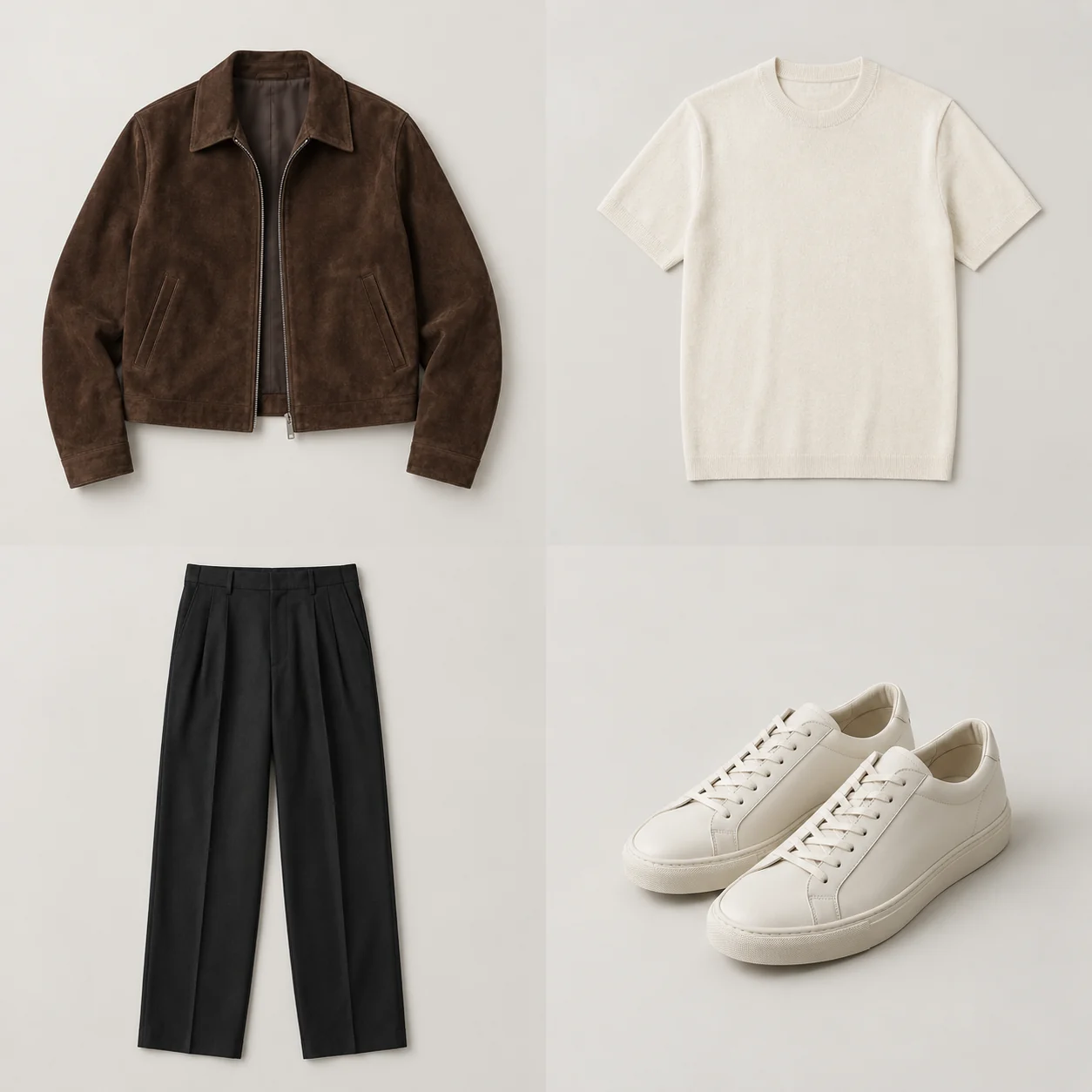
A practical version might be an ivory tee, olive lightweight trousers, familiar sneakers and a thin navy cardigan in your bag. Another could be a simple dress, comfortable sandals and a light overshirt. Check the actual fabric and construction; a garment's color or the word “summer” in its name does not establish how breathable it is.
A cool start that becomes a mild day
For a morning near 52°F and an afternoon near 70°F, consider a base that works alone plus a layer you can remove. A tee under an open overshirt, straight jeans and sneakers is one casual starting point. For a more polished day, try a shirt, tailored trousers and a light jacket with shoes appropriate to the venue.
Before leaving, take the jacket off and look at the outfit underneath. Is it still complete? Can you carry the jacket without filling both hands? A beautiful morning combination that becomes awkward at lunchtime is not a complete day plan.
A wet commute changes the footwear decision
If rain is expected, start with the route and your shoes. Check whether your actual pair is intended for wet conditions; appearance alone cannot tell you that. Avoid a trouser hem that drags through puddles, and consider whether you need a separate pair for the office. A coat advertised as water-resistant is not automatically waterproof.
One workable approach is a suitable rain layer over your normal office outfit, practical commuting shoes and dry indoor shoes carried separately. If that is too much to manage, choose the best appropriate pair you already own and simplify the outfit around it. Do not choose delicate suede just because its color matches the bag.
Review the complete day, then keep one alternative
Make a brief final check: outdoor conditions, activity, venue, footwear and a place for a removed layer. Confirm that every piece is clean, available and comfortable. A saved outfit cannot know that your only suitable jacket is still drying.
In your outfit plan, keep one alternate for a forecast change, such as a lighter layer or different shoes. You do not need five backup looks. The aim is a clear decision you can adjust when the real weather differs from the prediction.
PUT IT INTO PRACTICE
Your wardrobe is the starting point.
Explore outfit planner in DressNyse, then put it to work with clothes you actually wear.
Get the app ↗